Brady UX
our own venture · events company · 2012–2018Pub & Paint

We ran the room,
before we designed the software.

Pub & Paint was the painting-event company Brady Starr co-founded with Caitlyn Merwin: paint nights in bars, restaurants, breweries, campuses and offices across Baltimore, DC and Maryland. Over six years, 110,000+ paid guests painted with us in 52 partner venues. Brady designed the brand, the websites and the ticketing and booking flows, and taught a lot of the nights himself. It's where we learned how an event actually runs.

Role
Co-founder: brand, web, ticketing, teaching
Years
December 2012 to 2018
Where
Baltimore, DC and Maryland
110,000+paid guests over six years
52partner venues: bars, restaurants, breweries, golf clubs and campuses
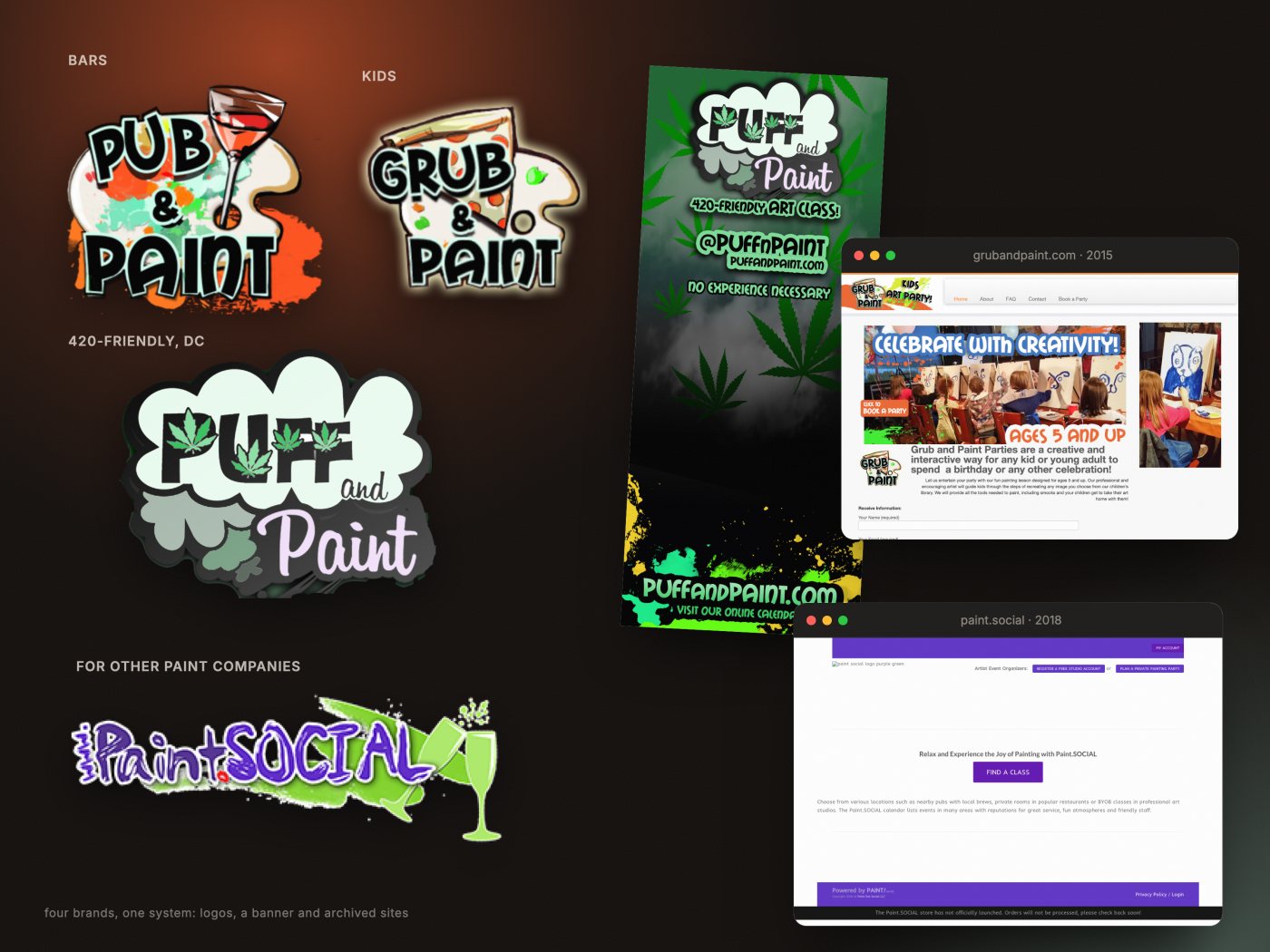
4brands on one system: Pub, Grub, Puff and Paint.SOCIAL
$40a public seat in 2017: canvas, paint, easel and teacher included
The night

Art class with a bartender

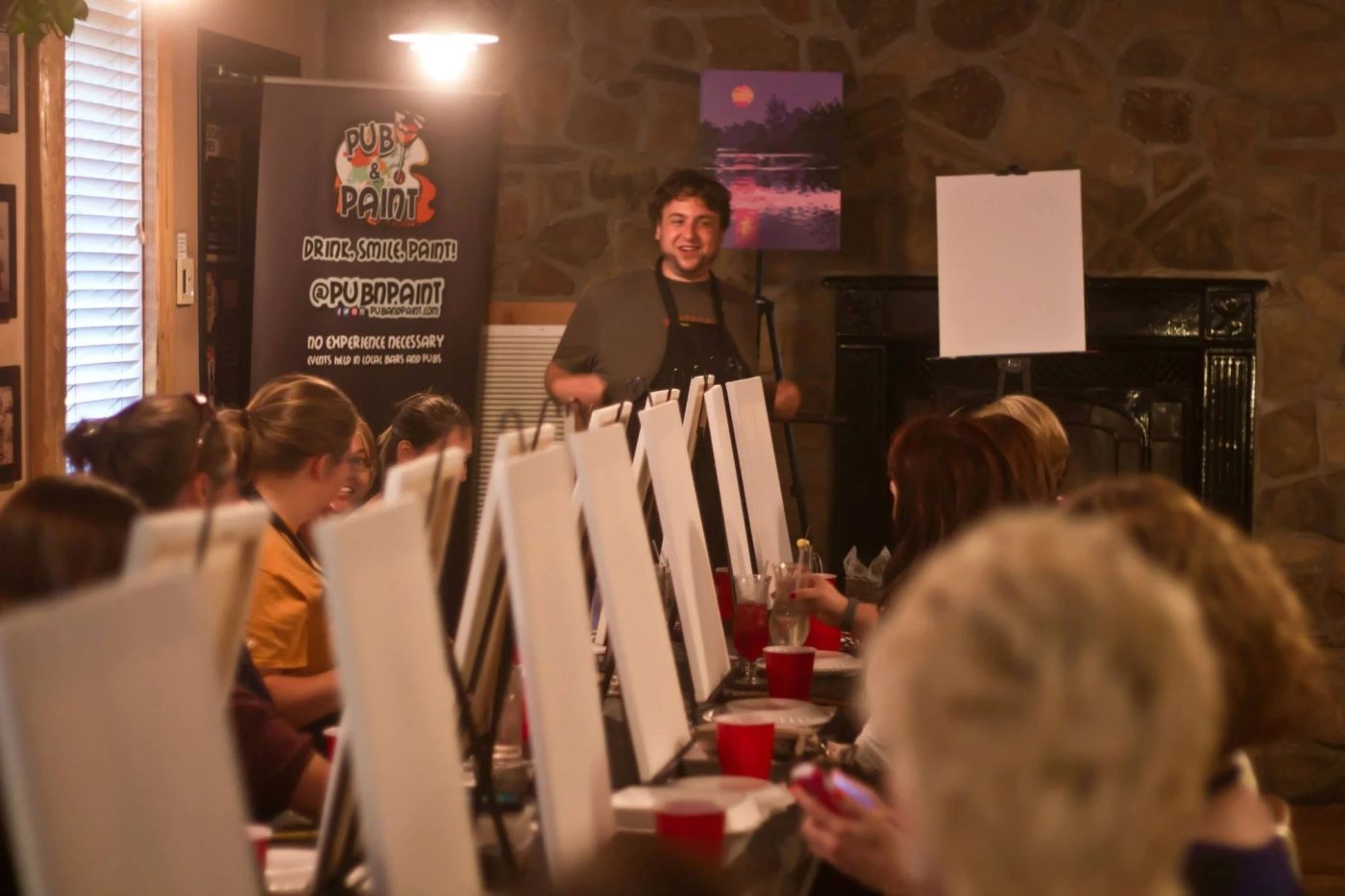
The idea fit on a banner: drink, smile, paint. Guests checked in about 30 minutes early and ordered from the bar. We brought everything else: easels, canvases, paint, brushes and aprons. An instructor broke the night's painting into simple steps, two hours later everyone went home with their own canvas, and nobody needed to have painted before.

Brady is a working painter and taught a lot of the nights himself. Public nights ran 7 to 9 on weeknights and 1 to 3 on weekends, in back rooms that would otherwise have sat empty. Private parties, office events and campus nights filled in the rest of the calendar.
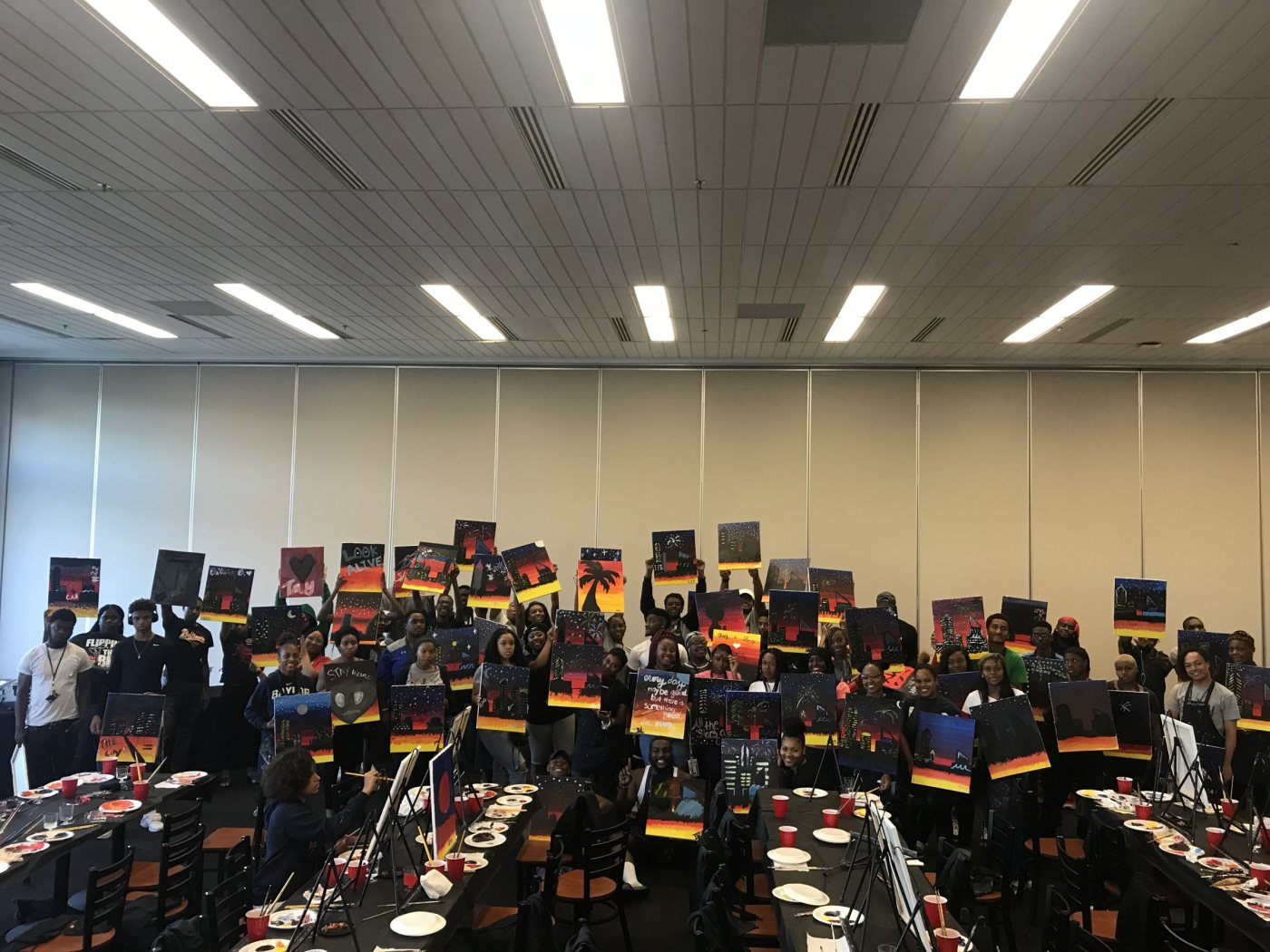
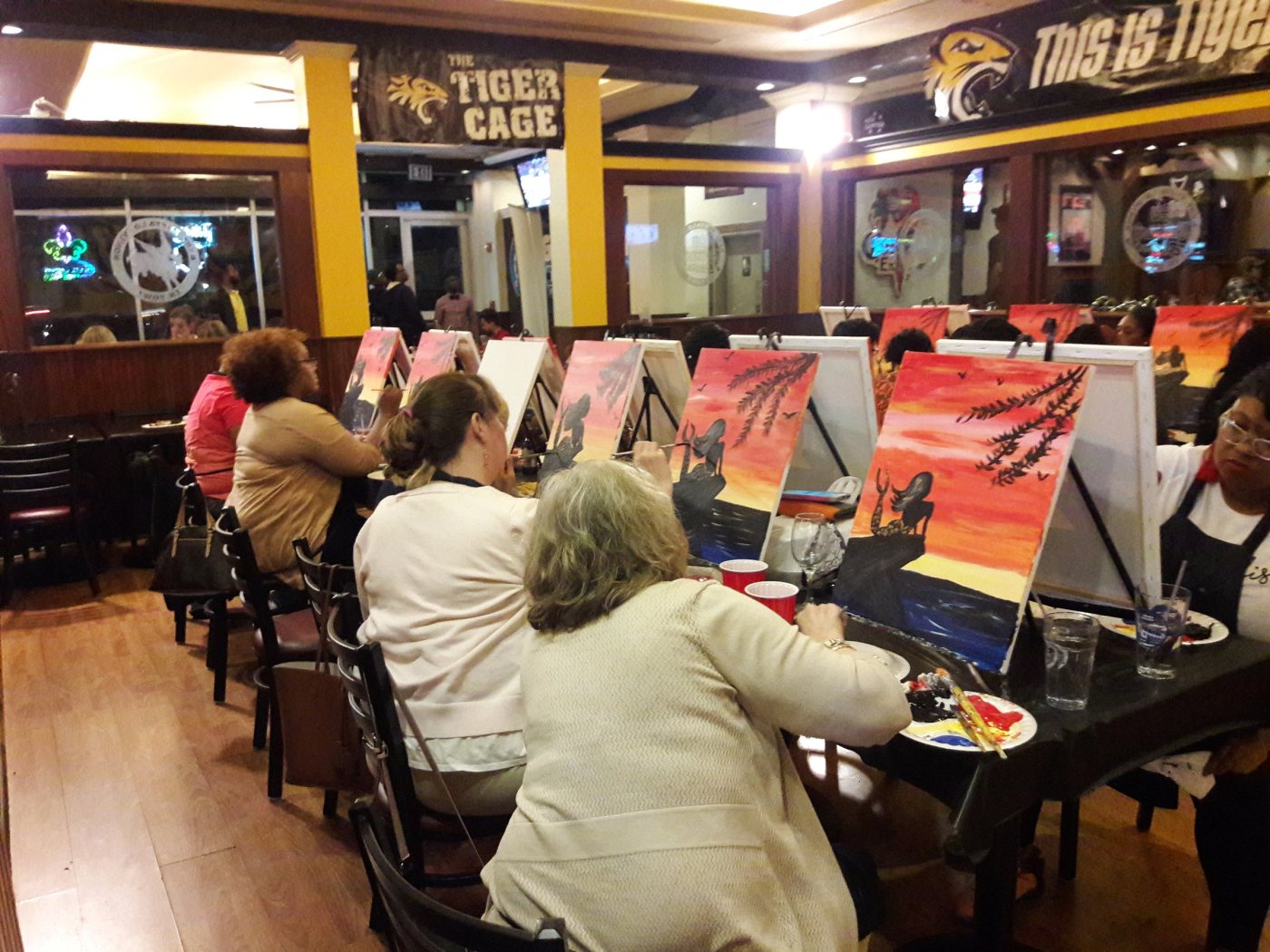
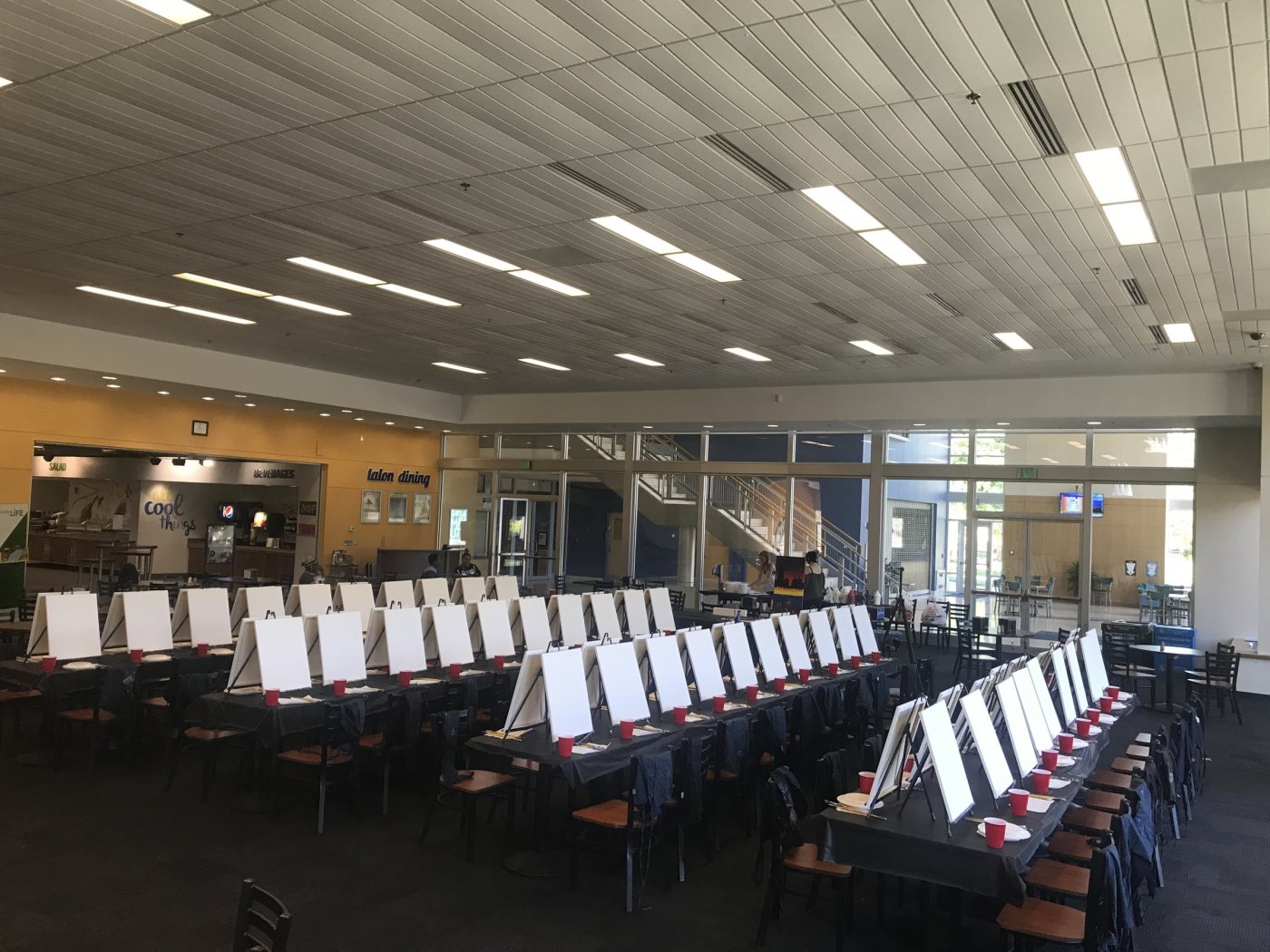
A dining hall, every canvas upA dining hall, every canvas up
Brady at the front, the blank canvas before step oneBrady at the front, the blank canvas before step one
A full bar back room, TowsonA full bar back room, Towson
Easels set before the doors openEasels set before the doors open
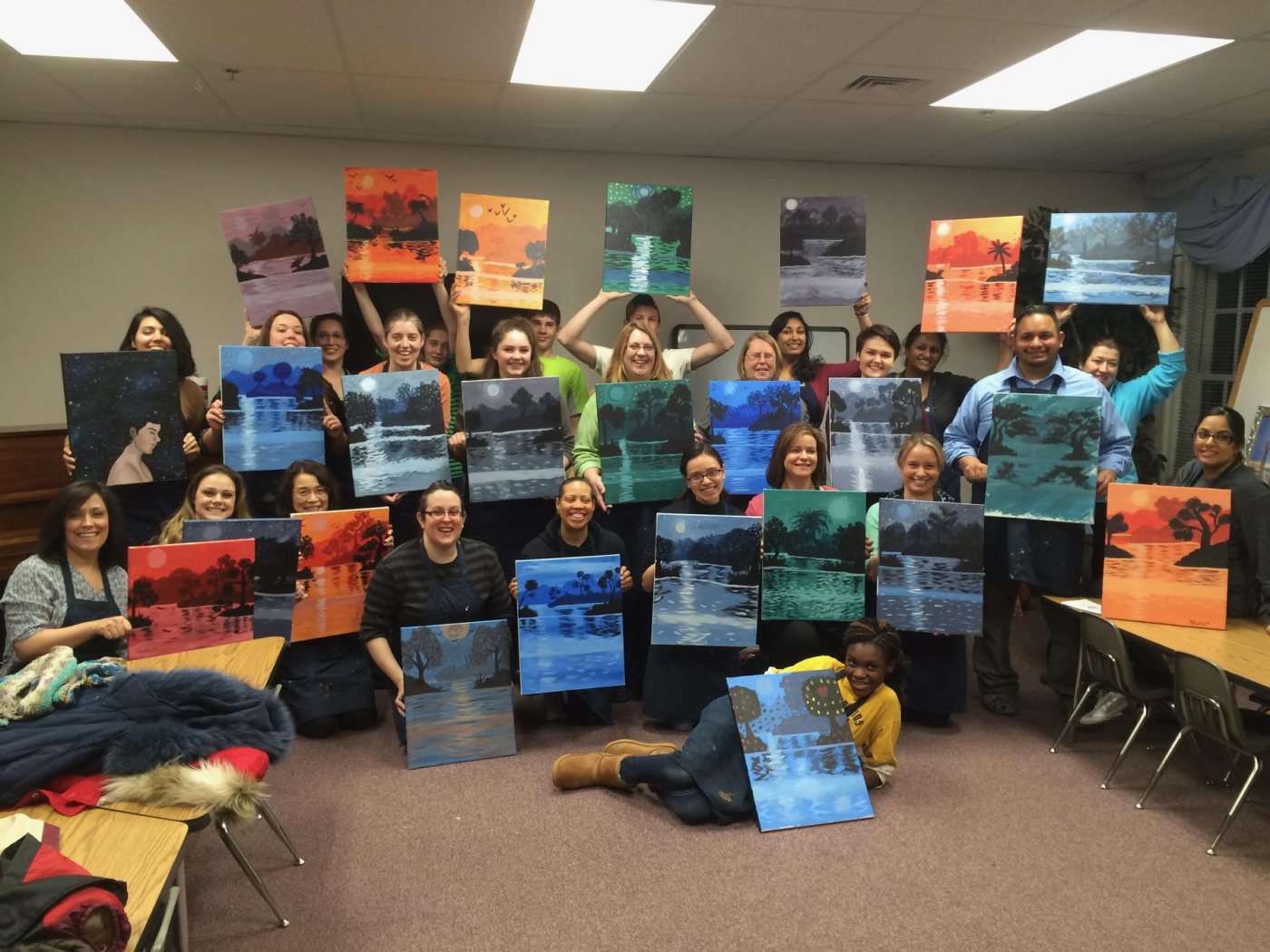
The revealThe reveal
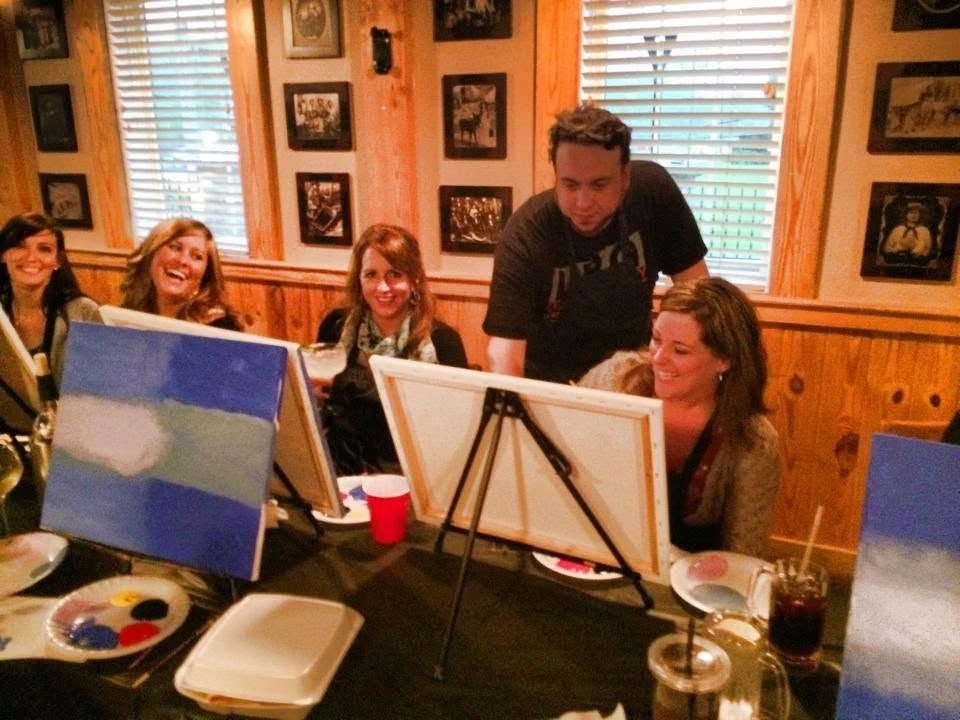
Helping a table mid-paintHelping a table mid-paint
Professional photos by Allison Washington; the rest are ours, from the nights themselves.
The brand

Drink, smile, paint

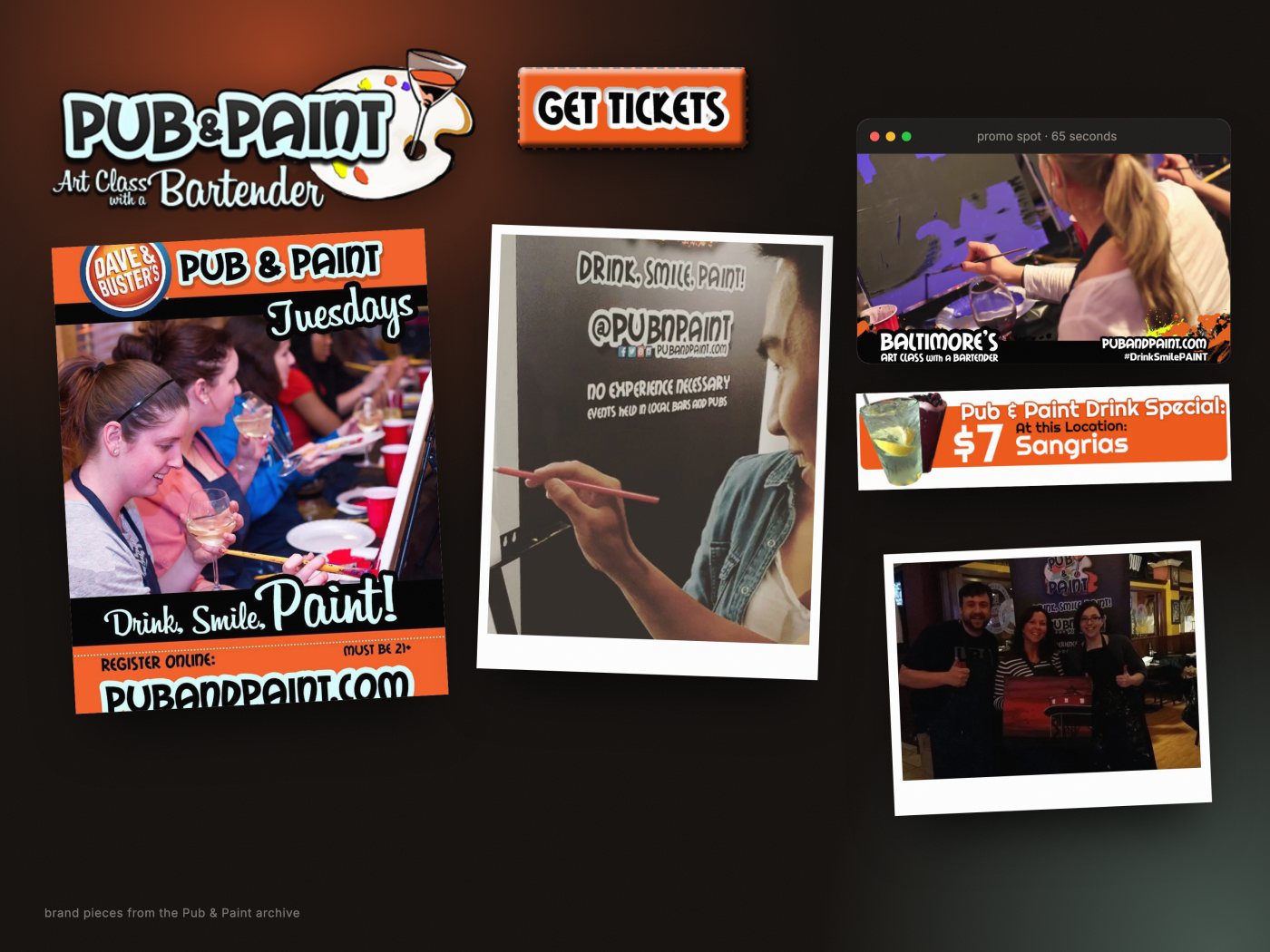
The mark is comic hand lettering on an artist's palette, with a wine glass standing in for the brush. Orange, black and a pale mint, loud enough to read across a bar. The tagline did the explaining: Art Class with a Bartender.

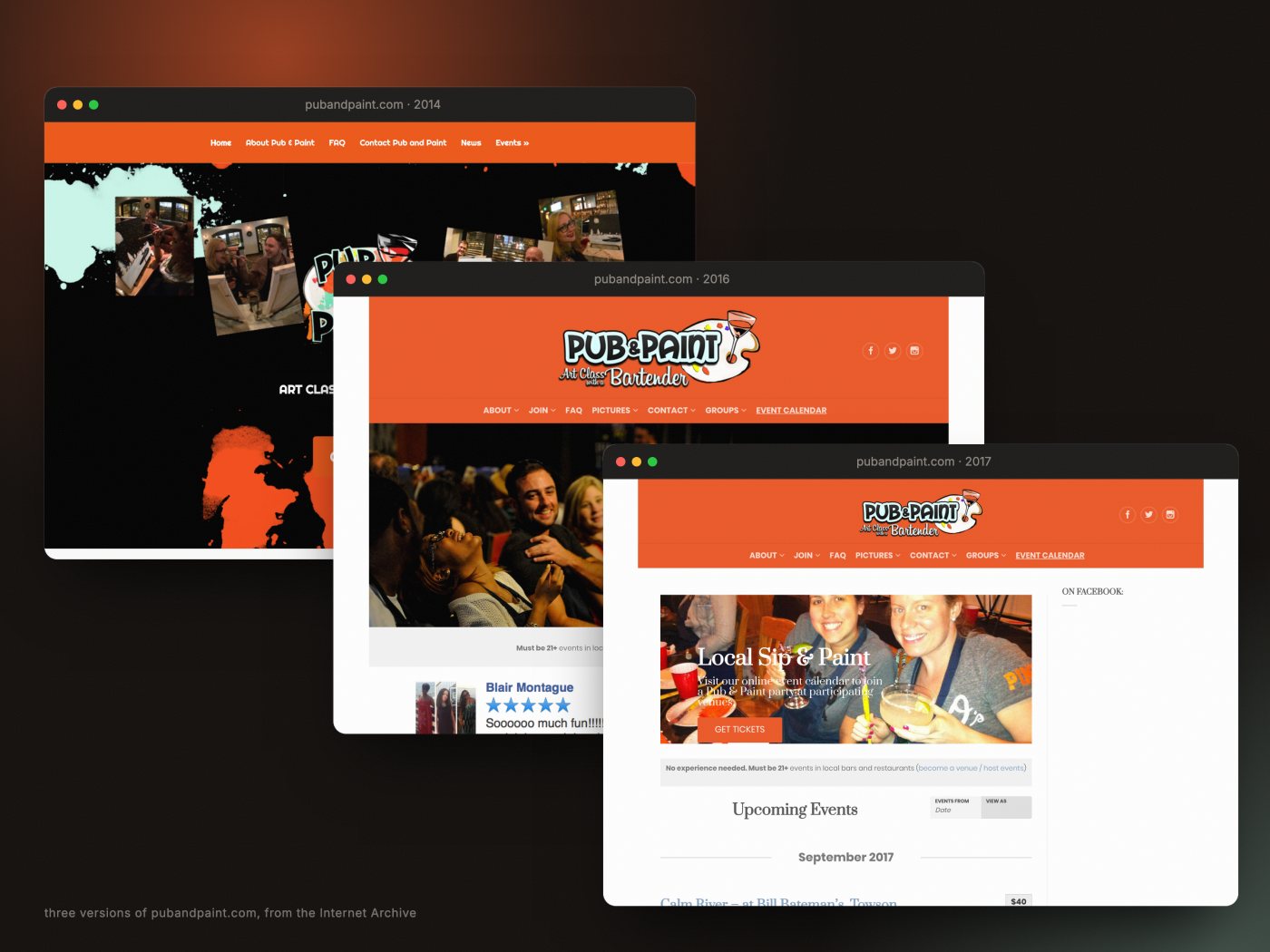
The site went through three versions in four years: a one-page splash with a single Get Tickets button in 2014, a photo-led home in 2016, and by 2017 a homepage that was the event calendar. Around it sat the things a room needs: a banner at every event, posters for each venue's regular night, drink-special banners for the event pages, and a 65-second promo spot.

pubandpaint.com in 2014, 2016 and 2017pubandpaint.com in 2014, 2016 and 2017
The poster, the banner, the promo spot, the drink specialThe poster, the banner, the promo spot, the drink special
Site pages from the Internet Archive; everything else from our own files.
what would you ship?

Most guests have never painted and aren't sure they can. What does the calendar show before they buy?

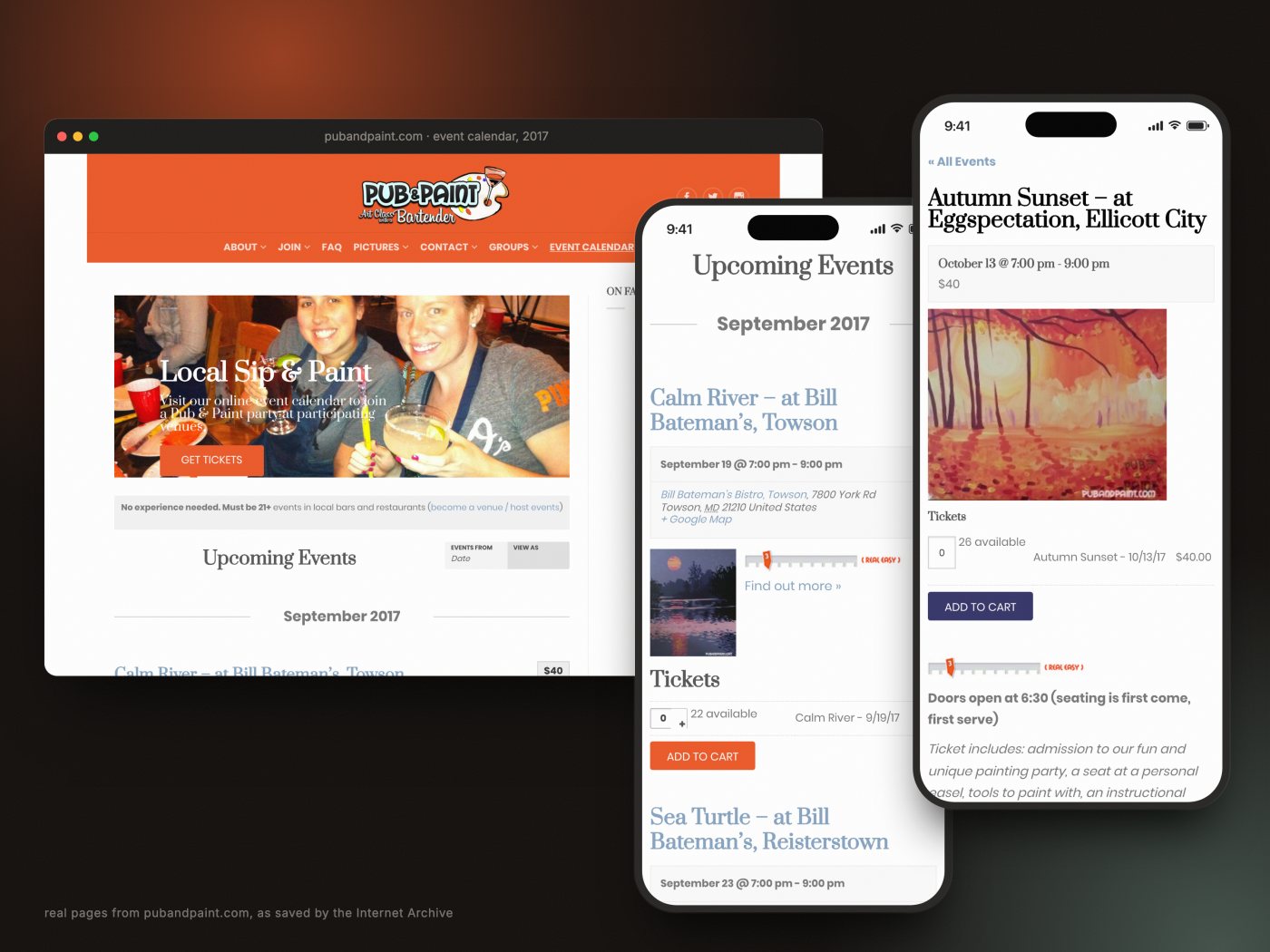
Doubt was the real obstacle, not price. Seeing the finished painting and a difficulty meter that starts at "real easy" answered "can I do this?" before anyone had to ask.

Selling a seat

Tell a first-timer everything before they pay

Most guests had never painted and weren't sure they could. So every event on the calendar showed the painting they would make, the venue, the time, the price, how many seats were left, and a paintbrush difficulty meter that ran from "real easy" up. They bought right there: pick a quantity, add to cart.

The event page answered the next questions before anyone had to ask: doors open at 6:30, seating is first come, first served, and the ticket includes a seat at your own easel, the tools, an instructional guide and a finished canvas to take home. Refreshments are not included. Groups got their discount at checkout, and a voucher-support page walked deal-site buyers through redeeming one, step by step.

The 2017 calendar and an event page, desktop and phone, as the Internet Archive saved them.
what would you ship?

A bar is deciding whether to host a weekly paint night. What does it cost them?

It made yes easy and filled 52 venues. The catch was that the venue judged us on the bar tab, so what guests spent and tipped became our problem too.

Venues

The creative solution for empty seats

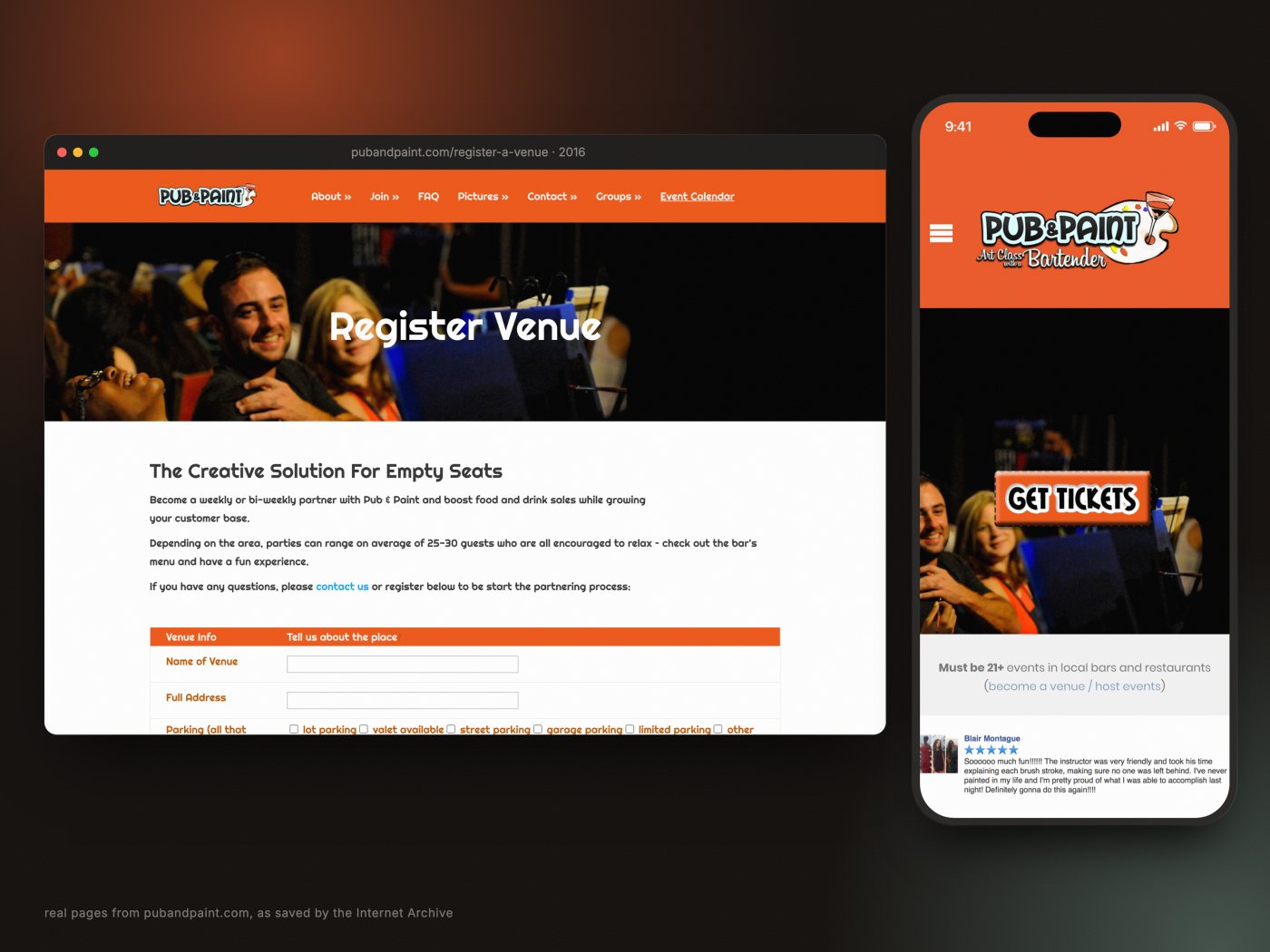
Venues paid nothing. They kept every food and drink sale, and we promised the crowd: on average 25 to 30 guests on a night that would otherwise have been quiet, weekly or every other week. The venue signup page asked only what we needed to plan: parking, two or three preferred slots, room capacity, and what the room already had, from table service to a mic, a PA and screens.

That deal moved the risk onto the bar tab. The hardest part of keeping a venue was never the painting; it was getting guests to spend and to tip the bar staff well. So each event page carried the venue's own drink special, and the table guide sent people to the bar rather than the paint water.

Register Venue, 2016, with the homepage it was linked from. Internet Archive.
The math

Why we chased the big private parties

About 80% of our tickets came through a deal site. A guest paid $20 and we kept $10. The canvas cost us about a dollar; the paint, the teacher, the setup and the drive all came out of the other nine.

Private events changed the math. With no middleman, we charged $30 to $40 a guest, and we got good at big ones: parties of up to 300 people for campuses, companies and groups. Three to four times as much per guest, and one booking could fill the whole room. So we made the private side as easy to buy as a single seat.

1
$30 to $40what we kept per guest at a private event, up to 300 guests
2
$10what we kept from a $20 deal-site seat, about 80% of tickets
3
about $1the canvas, per guest
Per-guest numbers from running the business. Totals and revenue are not shown.
Groups and parties

The price is on the form, not after a phone call

Private parties had their own booking form: date, start time, who's coming (adults, a mix, or a kids' party), where it is (a venue, an office or a home), and the head count, with the price for each group size printed right next to it. Bigger groups paid less per person, from $40 a guest for 15 to 20 people down to $25 for 41 to 60, and under 15 was a $600 flat rate.

A coordinator replied with availability, and the deposit could be paid online. Groups buying public seats got a tiered discount at checkout instead: the more seats, the bigger the code.

01Whendate and start time
→
02Whoadults, a mix, or a kids' party
→
03Wherea venue, an office or a home
→
04How manythe head count, with each tier's price shown
↺ a coordinator replies with availability; the deposit is paid online
The 2015 private-event booking form, in order.
Running the room

Paper that runs the night

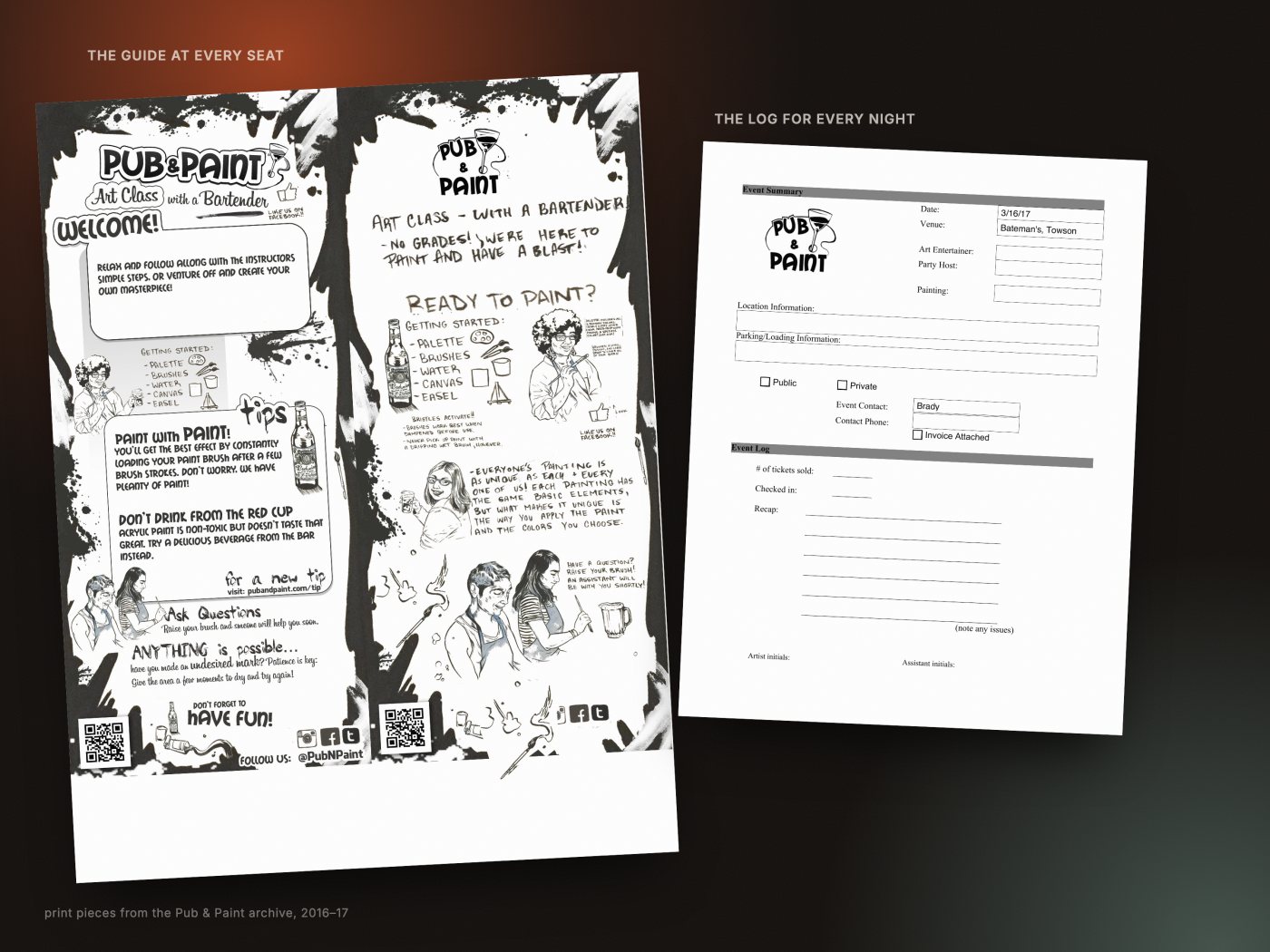
Every seat had a guide: welcome, what's in front of you (palette, brushes, water, canvas, easel), and a few tips. Load the brush, we have plenty of paint. Don't drink from the red cup: acrylic is non-toxic but tastes awful, try the bar. Made a mark you don't like? Let it dry and try again. Got a question? Raise your brush and someone will be with you shortly.

Every night had a log, too: venue, painting, the artist and the host, parking and loading notes, tickets sold against guests checked in, and a recap that asked staff to note any issues. The website hired the people who ran it, through a standing call for demonstrating artists: friendly, outspoken people who could talk to a big room.

The table guide and the event log, from the Pub & Paint archive.
Four brands

One way of running a night, four audiences

Once the system worked in bars, we pointed it at new rooms. Grub & Paint ran kids' birthday parties for ages 5 and up: an hour of painting, then an hour of food and presents. Puff & Paint, in 2016 and 2017, was one of the region's early 420-friendly art classes: private painting nights in DC homes, for guests 21 and over, who signed an agreement making clear that nothing was sold or provided. Hosts could earn by opening their home, and those tickets ran through Eventbrite.

Paint.SOCIAL offered the whole setup to other paint-event companies: ticketing, equipment rental and wholesale supplies, and the chance to license a local sip-and-paint company under our umbrella. We rented out kits and resold a lot of canvas. It stayed small.

The four marks, the Puff & Paint banner, and archived grubandpaint.com and paint.social.
Looking back

What the end taught us

In the last year, the website was hacked. Confirmation emails and receipts quietly stopped going out for about a year, and nothing told us. Guests bought tickets and heard nothing back, sales slowed, and a deal-site contract cost more than it brought in. We closed in 2018.

That is the lesson we build on now. The software behind an event has to tell you the moment it breaks: an email that didn't send, a night where tickets sold don't match guests checked in. We learned it with 110,000 guests and 52 venues, and it's why our event tools are designed around how the night actually runs.

work like this

need event systems from people who have run the night themselves? let's talk.

we build tools for event teams now, from people who have run the night: one system designed around how your events actually work, from $1,500.

next story
Morningstar Live Viewa safety-critical web interface that lives inside a solar charge controller and answers one question: is my system working?
→