Brady UX
our own venture · venue system · 2026LO-FI

A venue system,
built before the venue.

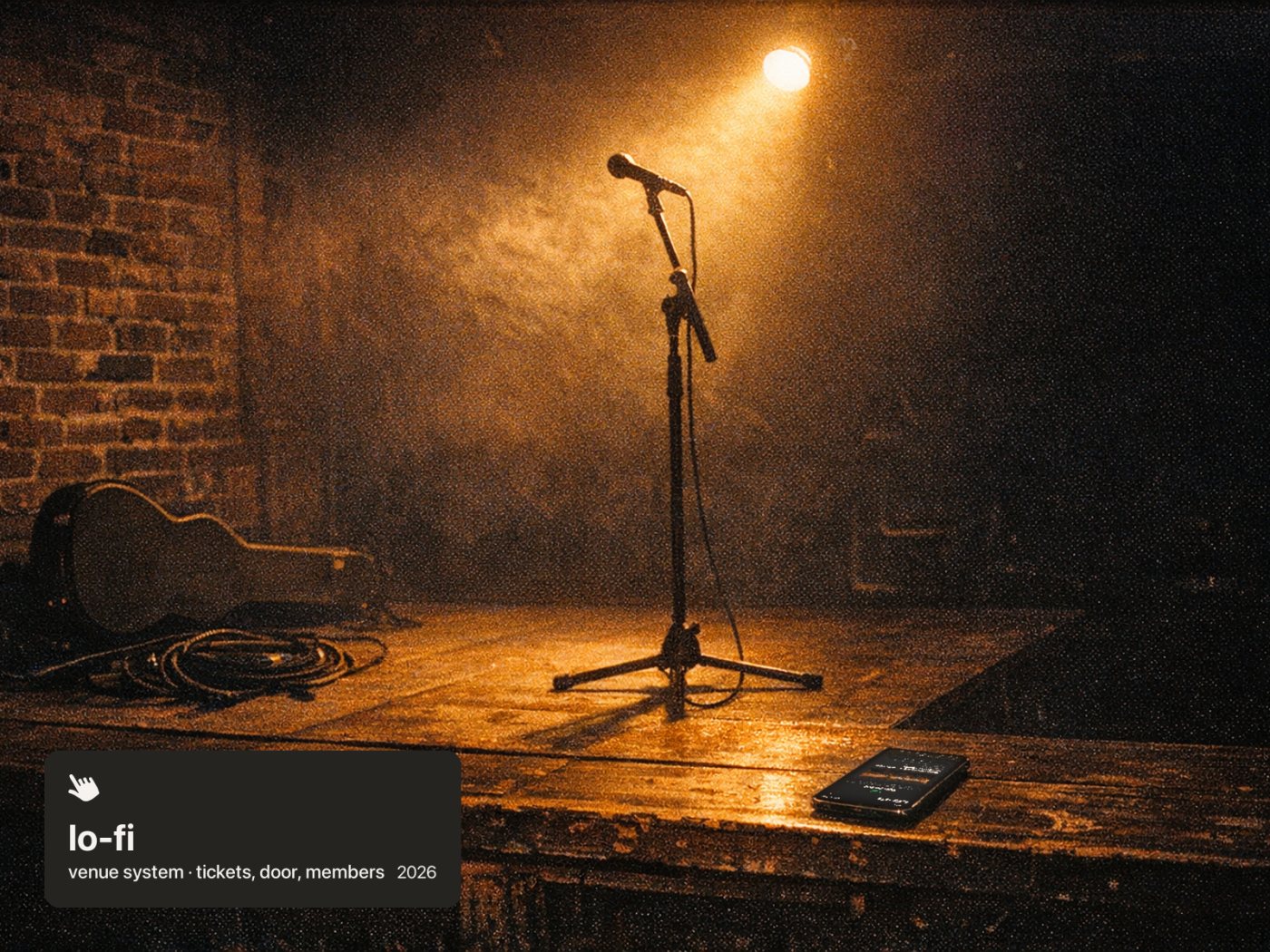
LO-FI was our own live music and arts venue, planned for 114 Centre Street in downtown Cumberland, Maryland: shows, comedy, art openings and a full bar by night, coworking by day. We designed and built the whole system it would run on, from the public site and ticket checkout to the door scanner, memberships and the dashboard, for a place that didn't exist yet. The venue never opened. The system was ready.

Role
Founder: product, brand, design
Status
Ready to run; the venue never opened
Shown with
Sample shows and guests
1system for the whole night: tickets, door, members, coworking, numbers
3staff roles, each seeing only what its job needs
7city landing pages for fans up to two hours away
30answers before a chart stops warning you it's a small sample
The brief

One room, two businesses, no opening date

LO-FI was planned as two things in one building. At night, a small stage with live music, comedy, art openings, vinyl nights and a proper bar. By day, a coworking space with day passes and memberships.

Nothing about it was settled yet: not the name, not the liquor licence, not whether daytime coworking would work in a town Cumberland's size. So the system couldn't assume a finished venue. It had to sell tickets and run a door on day one, and still be honest about everything that was undecided.
01Finda calendar, a page per show, and a landing page for each nearby city
→
02Buyguest checkout, one QR ticket per person, receipt by email
→
03Doora phone scans each code and shows one answer, big
→
04Learnthe Signal dashboard: what sold, who came, what we learned
↺ and by day: coworking memberships, day passes and a one-tap check-in
The night, in the order a guest meets it.
what would you ship?

The venue isn't open and the liquor licence isn't settled. What should the public site say?

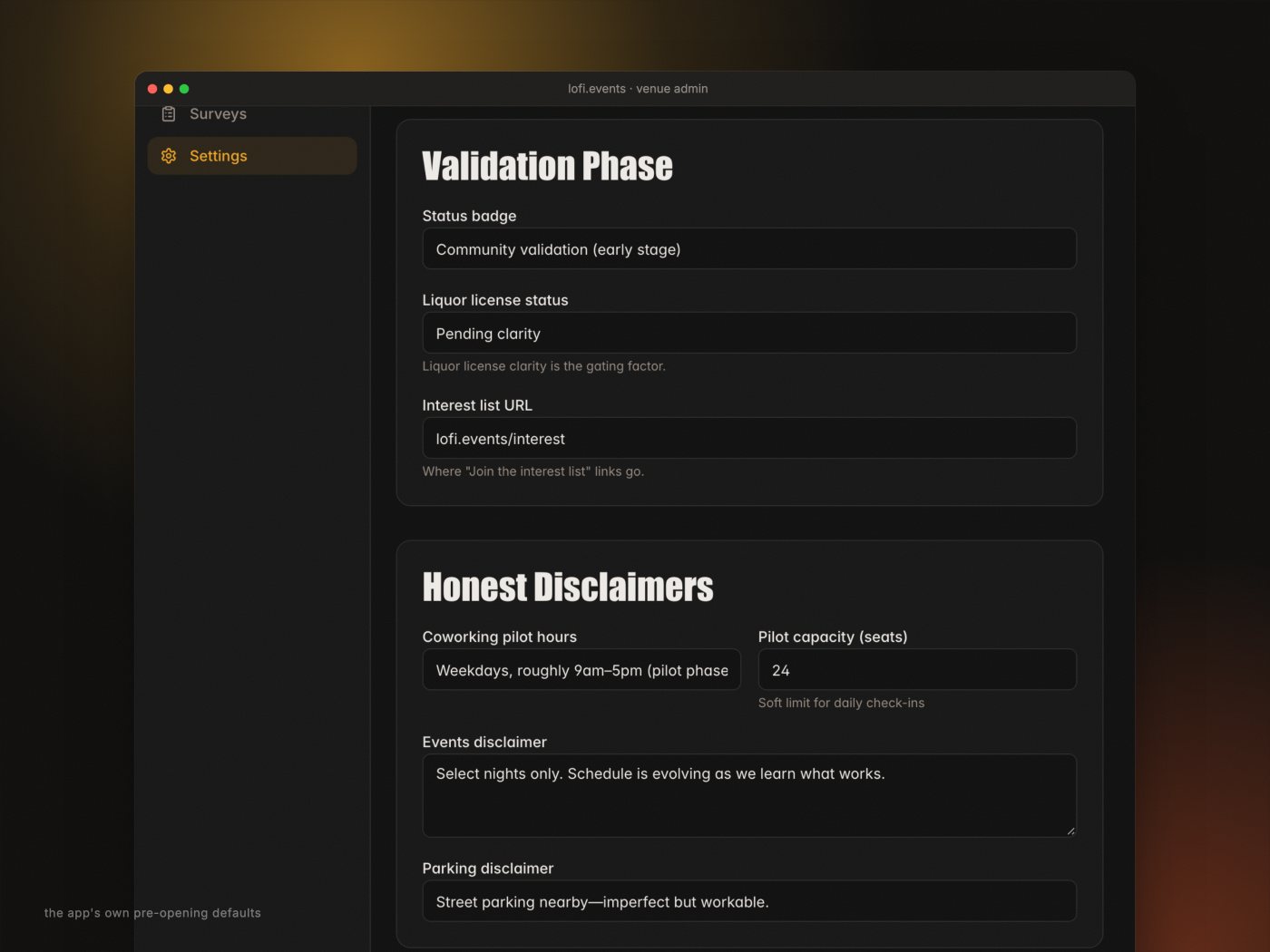
The badge, the licence status and the Honest Disclaimers all live in settings, so the site can tell the truth today and change the moment the facts do.

Nothing hard-coded

Build it so the undecided parts can change

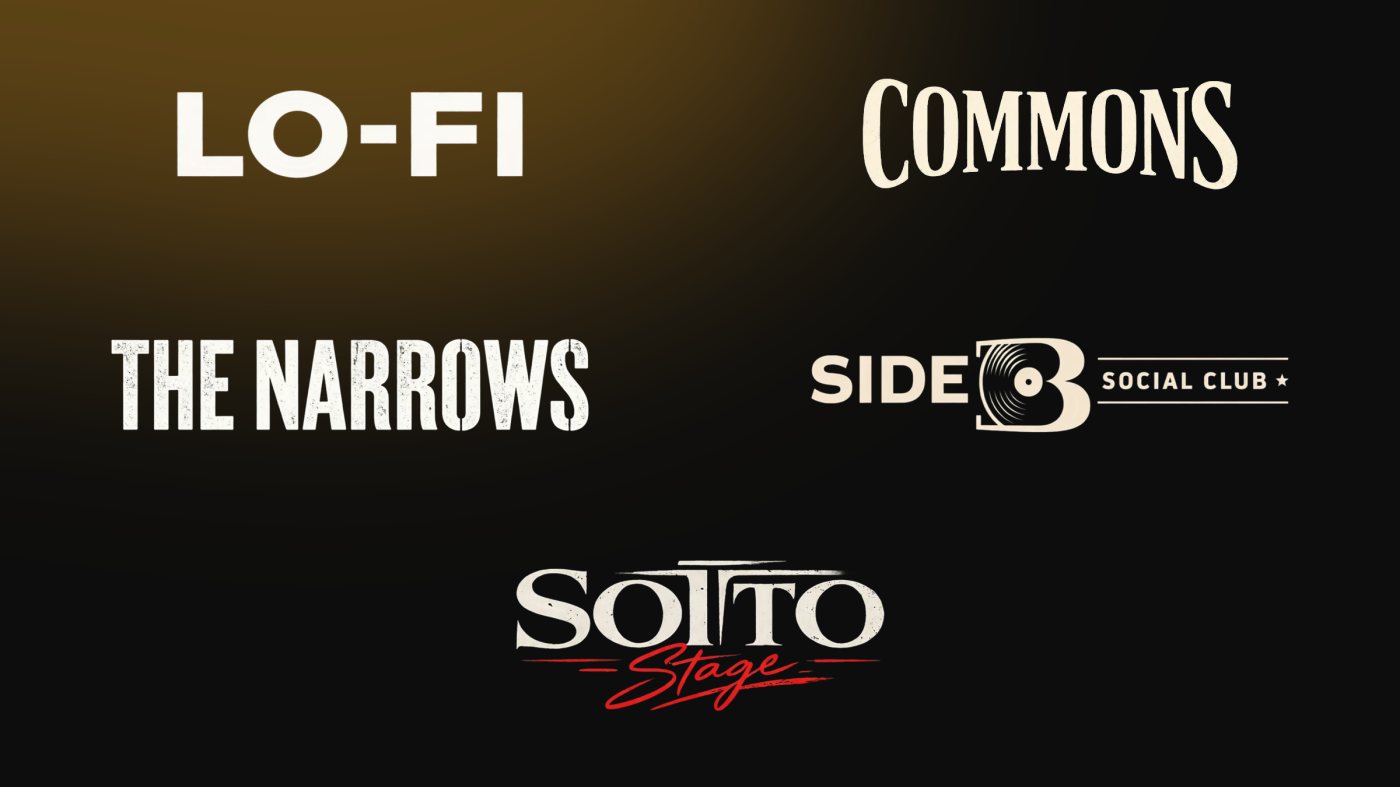
The name wasn't final, and the code still holds the wordmarks for five candidates. So the settings screen says it in plain words: "Name is tentative. Never hard-code, always read from settings." The same screen holds the status badge, the liquor licence status, and a section called Honest Disclaimers: pilot hours, seat count, and notes like "Street parking nearby, imperfect but workable."

Those lines are content the venue edits, not fine print. A public "Community validation (early stage)" badge sits on the events and updates pages until someone turns it off.

Five names, one system. LO-FI won.Five names, one system. LO-FI won.
Settings: the validation phase and the honest disclaimersSettings: the validation phase and the honest disclaimers
Settings shown with the app's own pre-opening defaults.
what would you ship?

Someone buys four tickets. How many QR codes do they get?

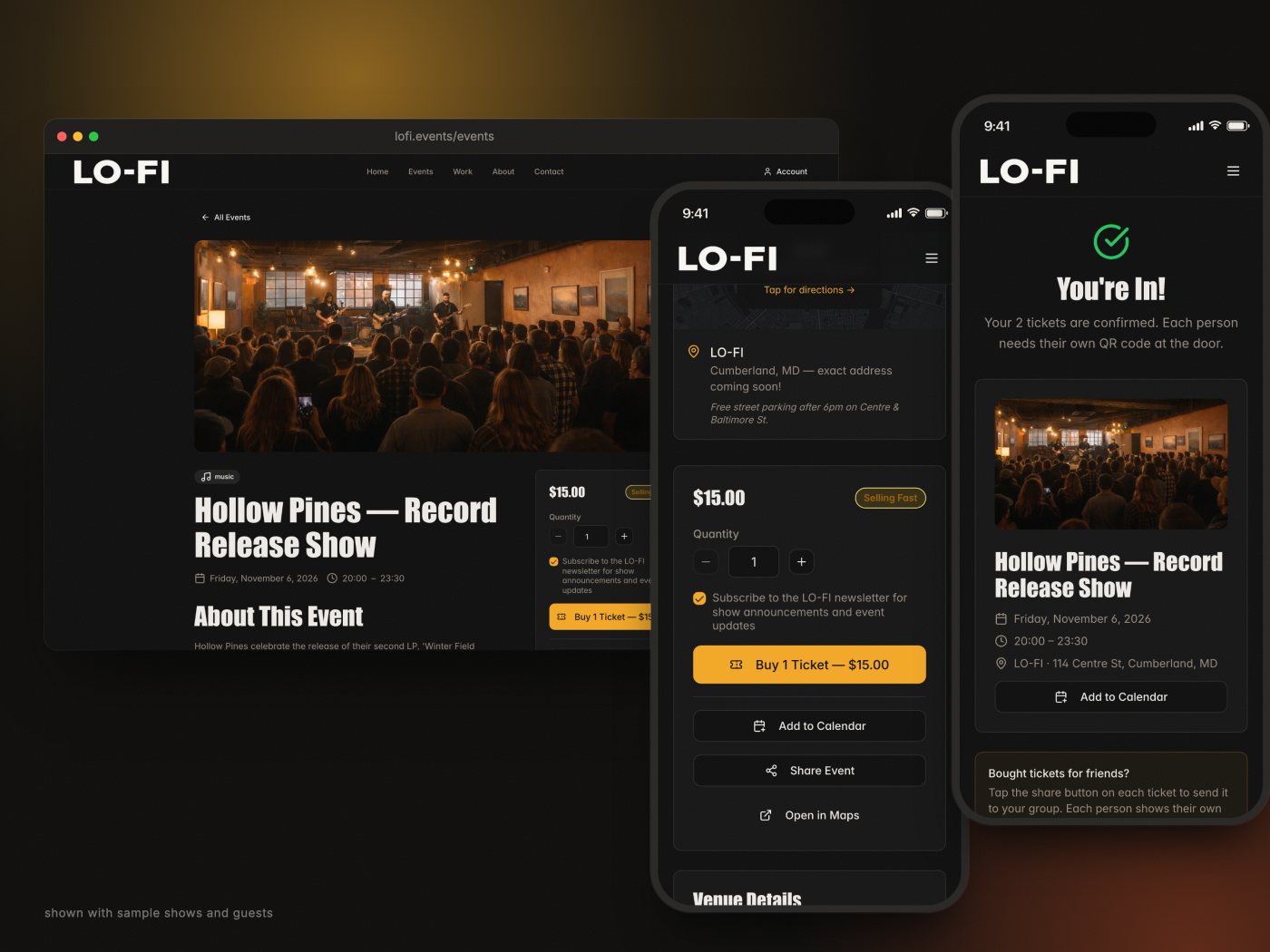
The confirmation says it plainly: each person needs their own QR code at the door. Every ticket can be shared on its own, so the buyer can send friends theirs.

Tickets

No account wall between a fan and a ticket

Anyone can buy without signing up. The button shows the total ("Buy 2 Tickets, $30.00"), and a quiet tag reports how fast a show is going, from "In Demand" to "Almost Gone". Reloading the confirmation page never creates a second order.

Every person gets their own QR code, labelled Ticket 1 of 2, each with its own share button, so the buyer can send a friend their ticket. The receipt email carries the QR images themselves, so a ticket still works in a basement with no signal.

The show page, the buy panel and "You're In!". Sample show.
The door

One answer on the screen, big enough to read in the dark

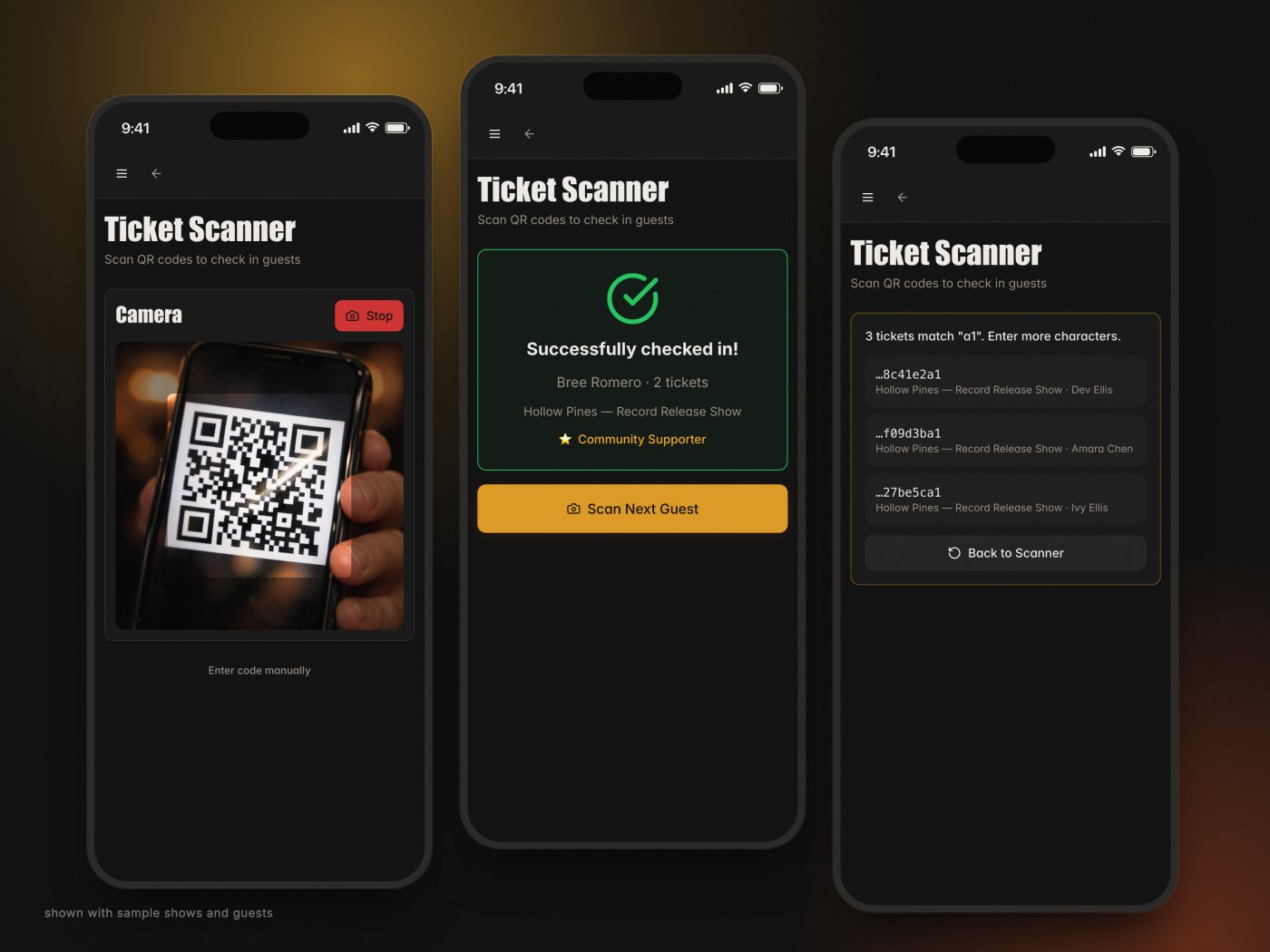
The door person sees either the camera or the result, never both. The camera stops the moment it reads a code, so the answer can't scroll away under a second scan. Green says checked in, with the name, party size and a star if they're a member. Red says why not: already checked in, or refunded. Then one big button: Scan Next Guest.

When a code won't scan, staff type just the last four characters. If more than one ticket matches, the screen lists them with the show and the buyer, and they tap the right one.

Scanning, checked in, and the pick list for a typed partial code. Sample guests.
Signal

A dashboard that tells you how far to trust it

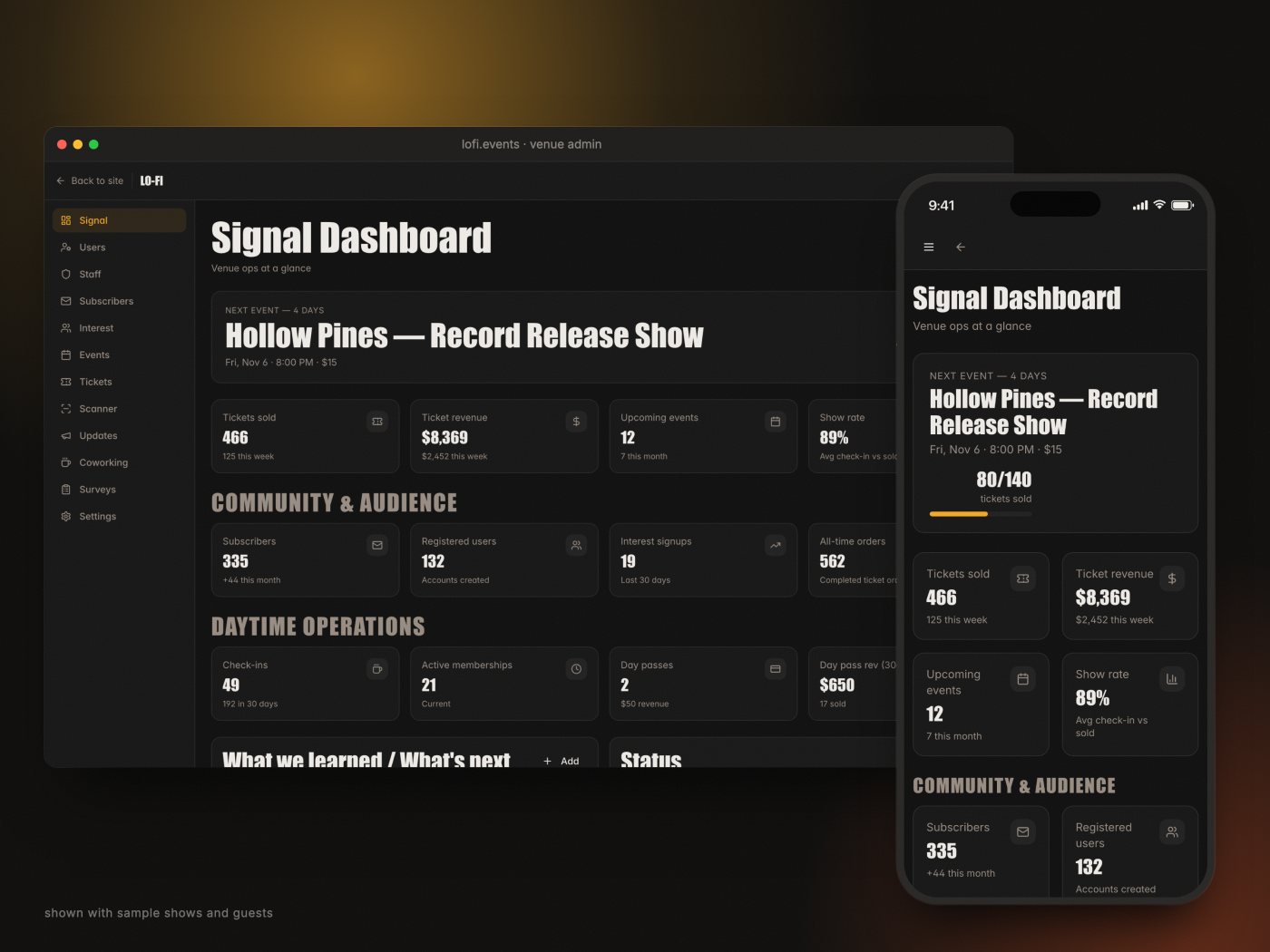
The Signal dashboard leads with the next show and how full it is, then tickets, revenue and show rate: how many ticket holders actually came through the door. A status card puts the plan in writing: events, bar and culture are the engine; ticket and door revenue is the lead metric; coworking is a daytime pilot.

Early on, every number is small. So any chart built from fewer than 30 answers carries a warning, the survey page is subtitled "Basic summarization (not overfitting)", and a weekly "What we learned / What's next" log sits right next to the numbers.

The Signal dashboard on desktop and phone. Sample numbers and log entries.
Daytime

Coworking as a pilot, not a promise

Coworking was sold as pre-orders for "Phase 2", with four plans from a $15 supporter membership to $150 unlimited, plus a Seasonal plan for people who travel April to November. Pay first, make an account after: the purchase links itself by email.

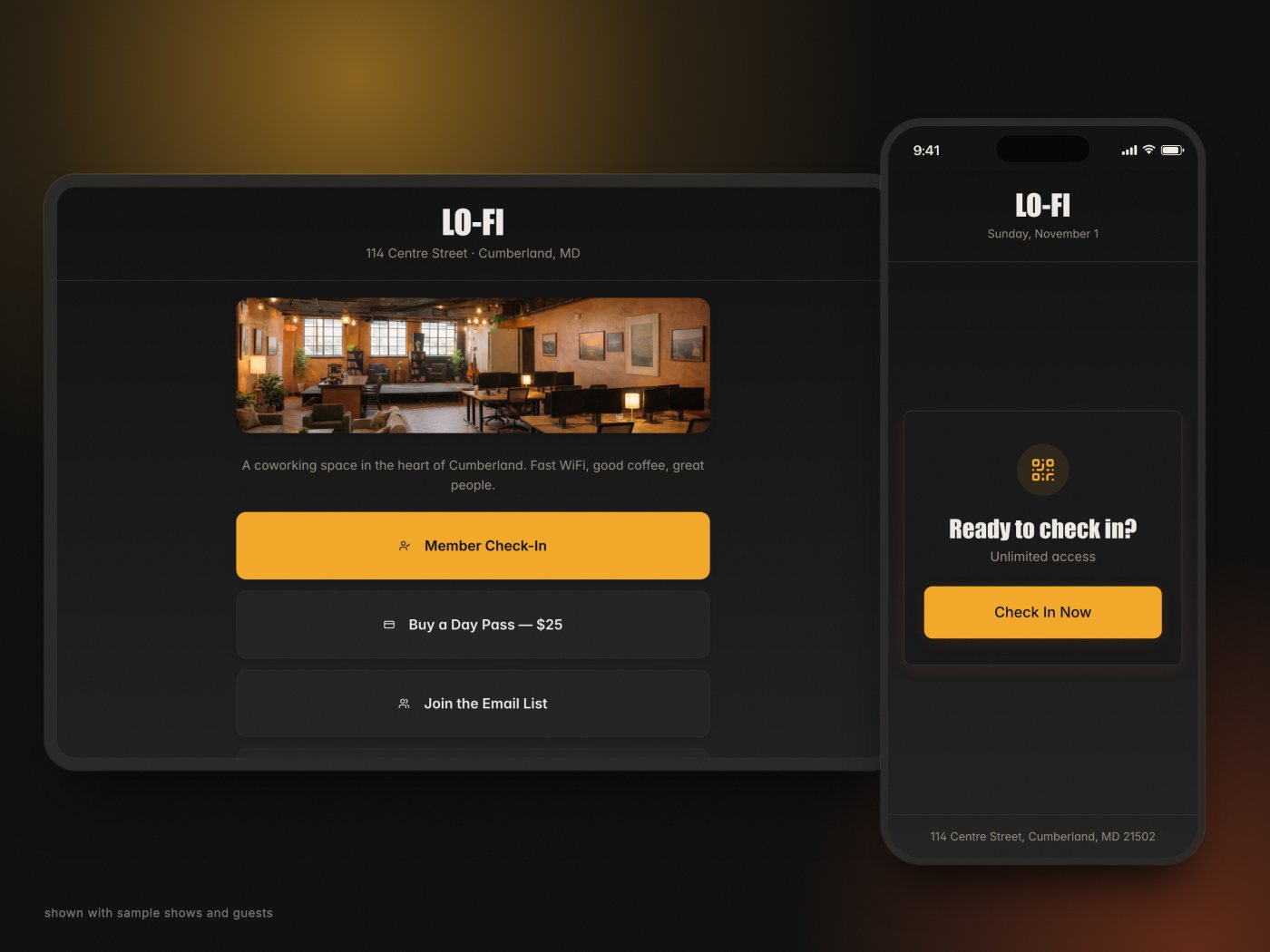
In the room, a tablet kiosk offers four big buttons and resets itself after two minutes idle. Members check in with one tap, and the screen says what it will use before they press it. Days used are counted from real check-ins, not a counter that can drift.

The front-desk kiosk and a member's check-in.
Looking back

The night that didn't come

LO-FI came very close to opening. Then one of the building's owners backed out at the last minute, and the deal ended. Everything in this story was ready for opening night anyway.

What we'd do next: the door doesn't yet check that a ticket is for tonight's show, and a guest opening their own ticket link should see it rather than an error. Small fixes for the first real night. The bigger lesson stays: design for what's actually true, including "we don't know yet", and the system survives the plan changing.

work like this

need a system that runs the whole night: tickets, door, members? let's talk.

we build this kind of system for venues and event teams now: one tool designed around how your night runs, from $1,500, with ticketing and payments as an add-on.

next story
Morningstar Live Viewa safety-critical web interface that lives inside a solar charge controller and answers one question: is my system working?
→