AI Won't Fix Your System: The Cost of Undefined UX
Leveraging AI for product builds? Learn why upfront system thinking is non-negotiable for consistent, scalable UX.
by Brady Starr · 2026-04-16
The Unseen Friction: A Lovable Case Study
Our recent project, built within the AI platform Lovable, provided an invaluable lesson. The platform was functionally sound—users could create courses, assign training, and track progress. Yet, despite its solid foundation, a pervasive sense of 'offness' lingered. Navigation felt inconsistent, critical flows seemed disconnected, and the visual language varied wildly across pages.
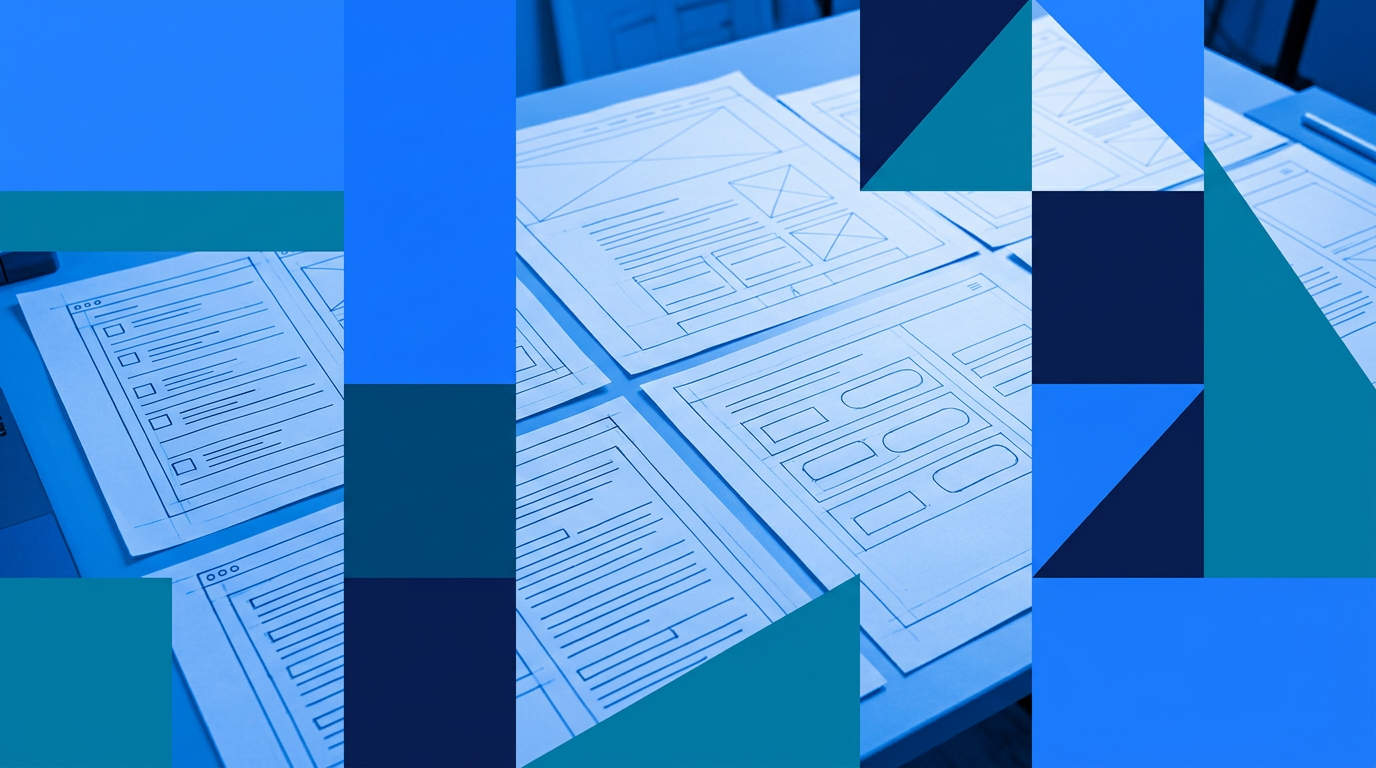
The audit's recommendation was clear: don't rebuild, but tighten what existed. Our goal was to polish the rough edges, aligning UI elements and enhancing user predictability without a complete overhaul. This approach forced us to confront the limitations of AI-first development when system thinking is an afterthought.
The Paradigm Shift: From Figma to In-Product Development
Traditionally, my process involves taking such issues into Figma. I’d map the system, define components, and create a clear structure before implementation. However, Lovable obliterates this clean separation. Within this AI environment, you design, implement, and adjust simultaneously, directly within the product itself.
This meant we couldn't just apply a predefined design system. Instead, we had to reverse-engineer one from the existing product. We meticulously tightened flows—fixing course completion logic, cleaning quiz behaviors, and improving pinning experiences to ensure users always knew their next step. Then, we tackled visual consistency, aligning cards, standardizing badges, and unifying interactions across the platform.
- Tightening Core Flows: Refined course completion, quiz logic, and navigation.
- Achieving Visual Consistency: Aligned cards, standardized badges, and unified interaction states.
- Eliminating Visual Clutter: Removed heavy gradients, glows, and solid blocks.
- Anchoring to a Reference: Used a preferred 'Risk Overview' card style as a consistency benchmark.
The Inconsistency Ceiling: When AI Echoes Your Undefined System
The platform *did* get cleaner and more predictable. Yet, the client's persistent observation—"it still doesn’t feel fully consistent"—highlighted a critical issue. We hit a ceiling, not due to lack of effort, but because of the underlying structure, or lack thereof, from the initial build.
At a certain point, you hit a ceiling. Not because you don’t know how to fix it. But because of how the system was built.
Brady UX
In traditional development, this is where a comprehensive design system saves the day, providing clear rules for components, spacing, and typography. But in an AI-generated environment, applying such a system post-hoc is impossible. Every inconsistency becomes a manual correction; every alignment, a battle against the AI’s ingrained 'momentum' from earlier, less defined patterns.
3x More Time Spent Rectifying Inconsistencies — Estimate of additional effort required when a strong design foundation is absent in AI-driven projects.
The Critical Realization: System Thinking Must Come First
The core problem wasn't the AI tool itself, but *when* the system thinking occurred. In AI-driven builds, the system doesn't come later; it *must* come first. If I were to restart this project, three crucial changes would be implemented upfront:
1. Lock Structure Early (Auth, Roles, Flows)
Before any generation, absolute clarity is needed on user types, their access, and their journeys. Without this, the AI duplicates efforts and creates fragmented experiences, necessitating painful cleanup later.
2. Define a Visual System Immediately
Not a full design system, but enough to establish fundamental rules for cards, buttons, hover states, and hierarchy. This initial visual language acts as a guardrail, preventing the AI from drifting and ensuring a consistent aesthetic from the outset.
3. Treat Prompts Like System Rules, Not Requests
This was the biggest revelation. Loose prompts yield loose output. Prompt inconsistency begets system inconsistency. You're not just instructing the AI; you're training it on *how* to build. Once it learns a pattern, good or bad, it will repeat it endlessly.

The Invisible Work: Beyond the AI's Output
Watching the process, the client noted, "I can kind of do this myself." On the surface, AI tools make design look simple. But the true value of a UX practitioner becomes clear in the unseen decisions: what to change, what to preserve, how to translate ambiguous feedback into precise adjustments, and—critically—how to prevent a minor tweak from escalating into a full system rebuild.
AI tools like Lovable are immensely powerful amplifiers. If your foundational product thinking is robust, you gain incredible speed. If it's loose, you dedicate the project's remaining time to cleanup. The hardest truth is that you can’t simply 'design it properly later' in the same way. The future of effective AI-driven product development hinges on guiding, constraining, and defining 'good' early. Otherwise, you're forever chasing consistency instead of innovating forward.