AI Rewrites the Interface: From Screens to Systems in UX
AI isn't replacing UX designers; it's dissolving the interface layer and transforming how we interact with products.
by Brady Starr · 2026-03-24
A profound shift is underway in product design, one that most people are misinterpreting. The recurring question, "Will AI replace designers?" misses the true disruption: AI is subtly, yet powerfully, dissolving the traditional interface layer we've known for decades.
From Navigating to Delegating: The Core Shift
With AI in the system, users are no longer just navigating; they are delegating. The paradigm shifts from a click-intensive, decision-making process to a simpler command: "handle this." The system then intelligently figures out the rest, often without requiring explicit step-by-step guidance.
- Old model: Click → Think → Click → Decide → Submit
- New model: "Handle this" → System interprets, decides, acts
Interfaces as Maps vs. Interfaces as Systems
Traditional UX is built like a map, guiding users along predefined paths through onboarding flows, dashboards, and menus. We reduce friction by clarifying this path. However, AI transforms products into dynamic systems rather than static maps. Users provide intent; the system interprets context, makes decisions, and takes action – sometimes invisibly.
Most products today break because they are still designed like maps but are expected to behave like systems.
Brady UX

Real-World Impact: The AI Operator Experiment
To illustrate this shift, I recently ran an experiment: an AI operator connected to Slack, email, and an internal workspace. Within the first hour, it diagnosed a Slack issue, analyzed channel structure, formed its own organizational opinion, and even published a blog post. This wasn't a feature; it was a demonstration of a fundamentally different kind of product interaction – context plus access plus action, without constant prompting or micromanagement.
The Real Shift: From Control to Trust
In traditional UX, we optimize for user control – enabling users to see, confirm, and click through every step. But with AI systems, this control becomes friction. The new design challenge is building trust. This isn't blind trust, but earned trust, requiring a new set of UX considerations.
- How do users understand what the system is doing?
- How can they intervene when necessary without breaking the flow?
- How do they verify outcomes efficiently?
- How do we convey 'confidence' instead of just basic 'status'?
78% of consumers are more likely to trust a brand that uses AI transparently. — Source: Salesforce 'State of the Connected Customer' report, highlighting the importance of trust in AI interactions.
New Primitives of UX for the AI Era (2026+)
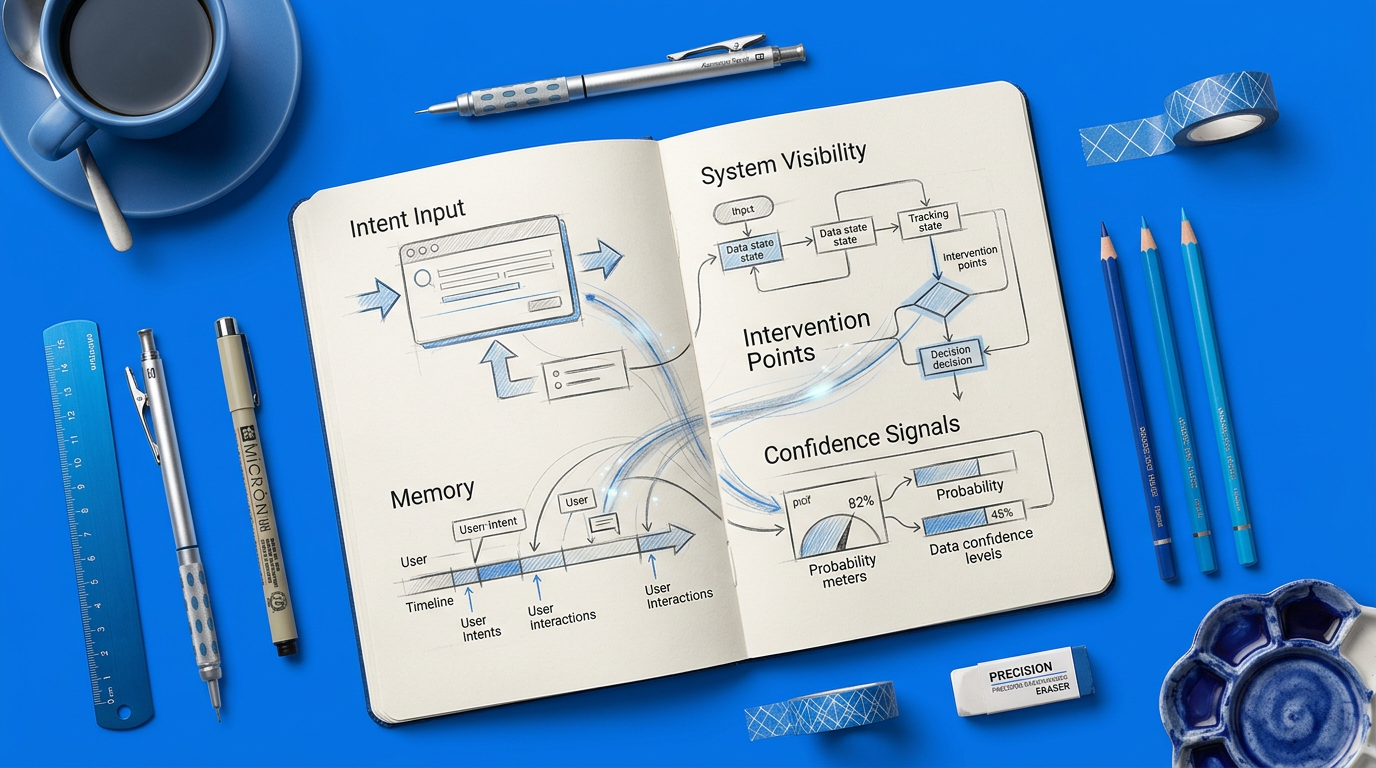
We're witnessing the emergence of new core building blocks for UX in AI-driven products:
- Intent Input: Flexible, natural ways to express user goals, moving beyond rigid forms.
- System Visibility: Not full transparency, but meaningful summaries and explanations of actions taken.
- Intervention Points: Strategically placed moments where users can step in or adjust without disrupting the system's flow.
- Memory: Systems that retain and apply context over time, creating a more personalized and intelligent experience.
- Confidence Signals: Indicators that help users assess the system's reliability and decide, "Can I trust this?"
Why This Matters for Companies Now
Many teams are currently 'adding AI' to existing products, often integrating it merely as a feature within a form, dashboard, or bolted-on assistant. While this delivers temporary gains, it fundamentally misses the bigger, architectural opportunity.
The real shift isn't just feature-level; it's foundational. Companies that will thrive in this new landscape won't just have AI features; they will build products that *feel* inherently faster, smarter, and more proactive, with significantly less reliance on constant manual interaction.
The Evolved Role of UX Design
UX design is not disappearing; it's evolving to become even more critical. The focus shifts from merely designing screens and flows to designing behavior, entire systems, robust feedback loops, and crucial trust frameworks. We move from asking "how does this look and flow?" to "how does this think and act?"
We are still in the early stages, with many AI-powered products feeling like chat wrappers or half-integrated tools. However, the next generation of products will feel less like traditional software and more like an intelligent, continuously working partner in the background.
The ultimate takeaway: AI isn't replacing UX; it's freeing UX from the confines of screens. If your product strategy is still solely focused on designing a series of pages, you're already behind.